A few things you might be wondering
What age is Mentaid for?
Mentaid is formulated for adults 18 and older. It's never too early or too late to be proactive about your brain health.
How long until I see results?
Mentaid is designed for consistent, daily brain support. Think of it less like a performance enhancer and more like a brain multivitamin. Some users notice changes. Others may not notice an immediate difference, but that doesn't mean it isn't working. The goal is ongoing support for your brain, not a dramatic short-term effect.
How should I take Mentaid?
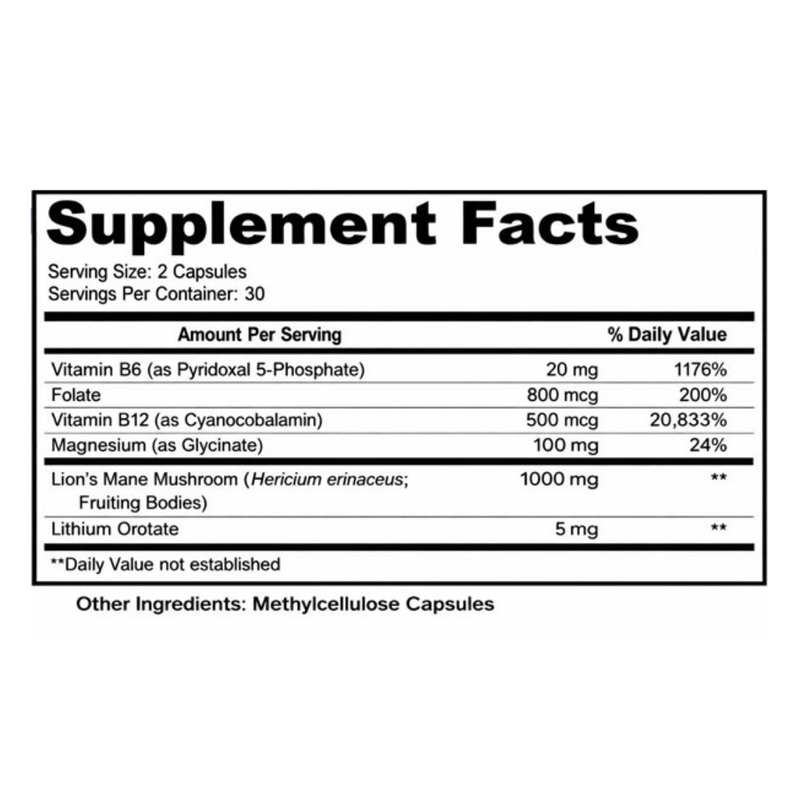
Take 2 capsules each morning or night.
Do not exceed the recommended serving size unless instructed by a qualified healthcare professional.
What fillers or additives are in Mentaid?
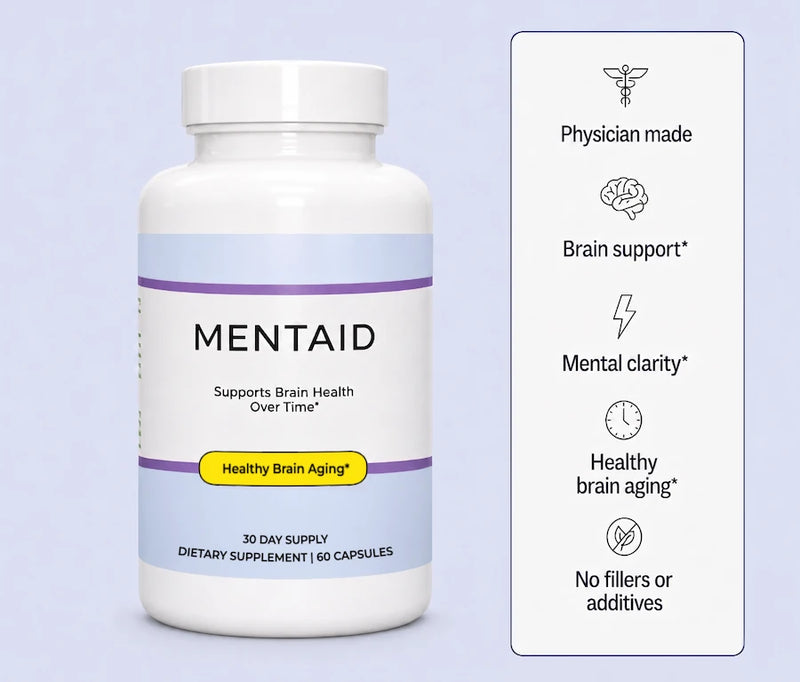
None. Every capsule contains only the active ingredients listed on the label, plus the capsule itself. We know that many tolerability issues people experience with supplements come from fillers and additives, not the ingredients themselves. That's why we kept it clean - just what's on the label and nothing more.
Is Mentaid tested?
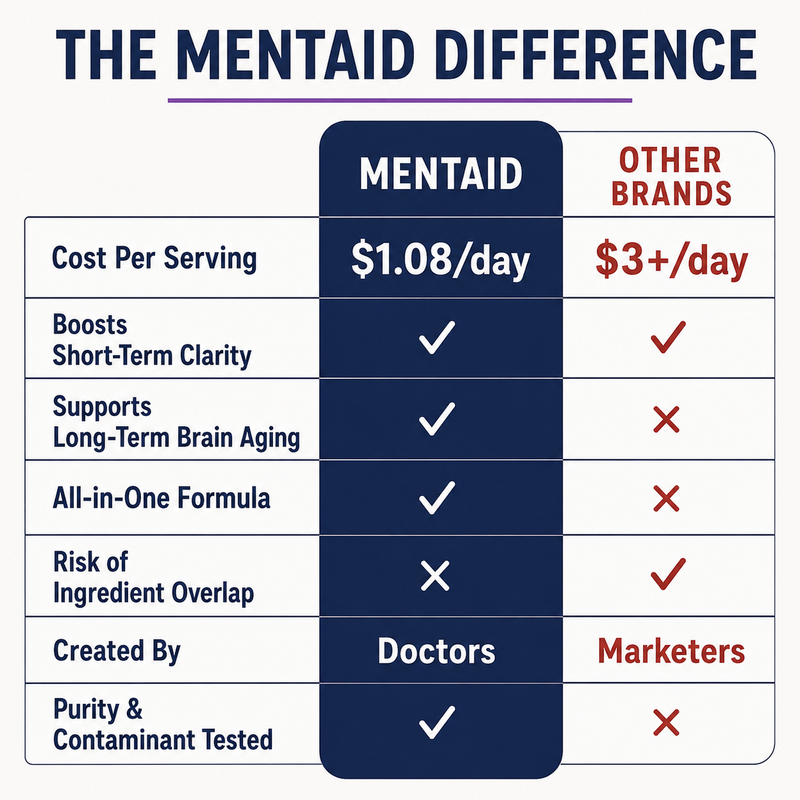
Yes. Mentaid is thoroughly tested at multiple stages of manufacturing. Every batch is tested for microbial contaminants, heavy metals, and purity, and comes with a Certificate of Analysis.
Is Mentaid manufactured in the United States?
Yes! Mentaid is manufactured in the state of Georgia in the United States.
Isn't lithium a prescription medication?
Lithium carbonate is a prescription medication used to treat bipolar disorder, and that's likely what comes to mind. But Mentaid contains lithium orotate, a different compound entirely. Lithium orotate is a naturally occurring mineral salt that delivers lithium at nutritional doses, far lower than what's found in any prescription. It's available over the counter and has been used as a dietary supplement for decades. Think of it less like a drug and more like a trace mineral supplement, similar in concept to magnesium or zinc.*
How much lithium is in Mentaid?
Our formula contains 5 mg of lithium orotate, which provides approximately 200 micrograms of elemental lithium.
To put that into context, naturally occurring lithium in some drinking water sources can reach similar levels.
Is lithium safe?
Lithium has been studied for decades.
At prescription doses, it requires monitoring and lab draws. At low, supplemental doses, lithium has a very different safety profile.
We formulated conservatively and thoughtfully, with daily use in mind.
If you have a medical condition, especially a thyroid or kidney condition, or take medications that may interact with lithium, we recommend speaking with your healthcare provider.
For more information, see our Guide to Lithium Orotate.
Why haven't other supplements included lithium?
If a product claims to support brain health but ignores lithium, it’s worth asking if they're even focused on "brain health".
I have an MTHFR variant. Can I take Mentaid?
Common MTHFR gene variants are present in many people.
"You may have heard that if you have an MTHFR variant, you should avoid folic acid and should take other types of folate, such as 5-MTHF. However, this is not true. People with an MTHFR gene variant can process all types of folate, including folic acid."
Large clinical studies evaluating B vitamins for cognitive support have commonly used non-methylated forms. These forms have decades of safety and research behind them.
For this formula, we selected forms supported by strong clinical evidence and safety data. If you have a diagnosed metabolic disorder or specific medical concerns, consult your healthcare professional.
Why didn't Mentaid include ______ ?
Every ingredient in Mentaid was selected based on the strength and quality of available human clinical research. While many ingredients show promise in preclinical or animal studies, human outcomes do not always mirror early findings.
We prioritize well-designed human trials, safety and tolerability data, and how each ingredient functions within a cohesive formulation.
We continuously review emerging research and will refine the formula if and when new, high-quality human evidence supports it.